Kitchen cabinet manufacturing is undergoing a significant transformation driven by digital advancements. As the demand for customized, high-quality cabinets grows, manufacturers turn to digital tools to enhance efficiency, precision, and productivity.
Digital transformation in cabinet manufacturing is not just about upgrading equipment—it’s about integrating automation, AI, and cloud-based solutions to streamline design, pricing, and production.
One of the most impactful advancements in this space is the adoption of Configure, Price, Quote (CPQ) software, which simplifies complex workflows and enhances decision-making.
Among these solutions, KitchenDEV stands out as a leader in industry optimization. KitchenDEV provides an advanced CPQ platform tailored for cabinet manufacturers, enabling them to automate quoting, pricing, and order management. This shift toward digitalization is redefining the way kitchen cabinets are designed, manufactured, and delivered, setting new standards for efficiency and profitability.

The Digital Transformation of Cabinet Manufacturing
Digital transformation in cabinet manufacturing is reshaping the industry and the way we work by replacing manual processes with automated, AI-driven solutions.
Previously, manufacturers relied on paper-based designs, manual pricing calculations, and labor-intensive production workflows, leading to inefficiencies and errors. Today, cloud-based design software allows manufacturers to streamline their operations, from planning to production, reducing time-to-market and material waste.
Automation and AI-driven technologies have significantly enhanced precision in cabinet manufacturing. CNC machines, 3D modeling software, and AI-powered optimizers now enable manufacturers to create detailed, customized cabinet designs with minimal human intervention. Cloud-based platforms facilitate seamless collaboration among designers, manufacturers, and retailers, ensuring real-time updates and reducing miscommunication.
These technologies also integrate with inventory management systems, allowing for real-time tracking of materials and improved demand forecasting.
One of the most notable changes in the industry is the shift toward data-driven decision-making. AI-powered analytics help manufacturers optimize production schedules, predict maintenance needs, and reduce downtime. Digital twin technology—virtual models of real-world processes—allows manufacturers to simulate different production scenarios, identifying inefficiencies before they occur. By leveraging these tools, manufacturers can enhance quality control, minimize errors, and increase overall efficiency.
Digital transformation is improving customer experience in cabinet manufacturing. Virtual and augmented reality tools enable customers to visualize designs before production, ensuring satisfaction and reducing costly revisions. Online configurators powered by AI allow customers to customize cabinets in real-time, streamlining the ordering process and enhancing engagement.
By embracing digital transformation, cabinet manufacturers can achieve greater production accuracy, minimize costs, and enhance customer satisfaction. As digital solutions continue to evolve, businesses that integrate AI, automation, and cloud-based technologies will gain a competitive edge in an increasingly fast-paced market.
Shift from Manual to Digital
Traditional paper-based workflows are being replaced by automation and AI-driven solutions. Cloud-based design software streamlines planning, production, and reduces material waste.
Automation & AI in Cabinet Manufacturing
CNC machines and 3D modeling software enhance precision and customization. AI-powered optimizers reduce human intervention and improve design accuracy. Cloud platforms enable real-time collaboration between designers, manufacturers, and retailers.
Data-Driven Decision Making
AI analytics optimize production schedules and predict maintenance needs. Digital twin technology allows for testing and refining production processes before implementation. Real-time inventory tracking ensures better demand forecasting and material management.
Enhancing Customer Experience
Virtual and augmented reality tools enable customers to preview designs before production. AI-driven online configurators allow real-time customization and reduce order errors.
Competitive Advantage Through Digitalization
Increased production accuracy and efficiency lower costs and improve customer satisfaction. Businesses that integrate automation and AI gain a long-term competitive edge in the market.
The Rise of CPQ Solutions in Kitchen Cabinet Manufacturing
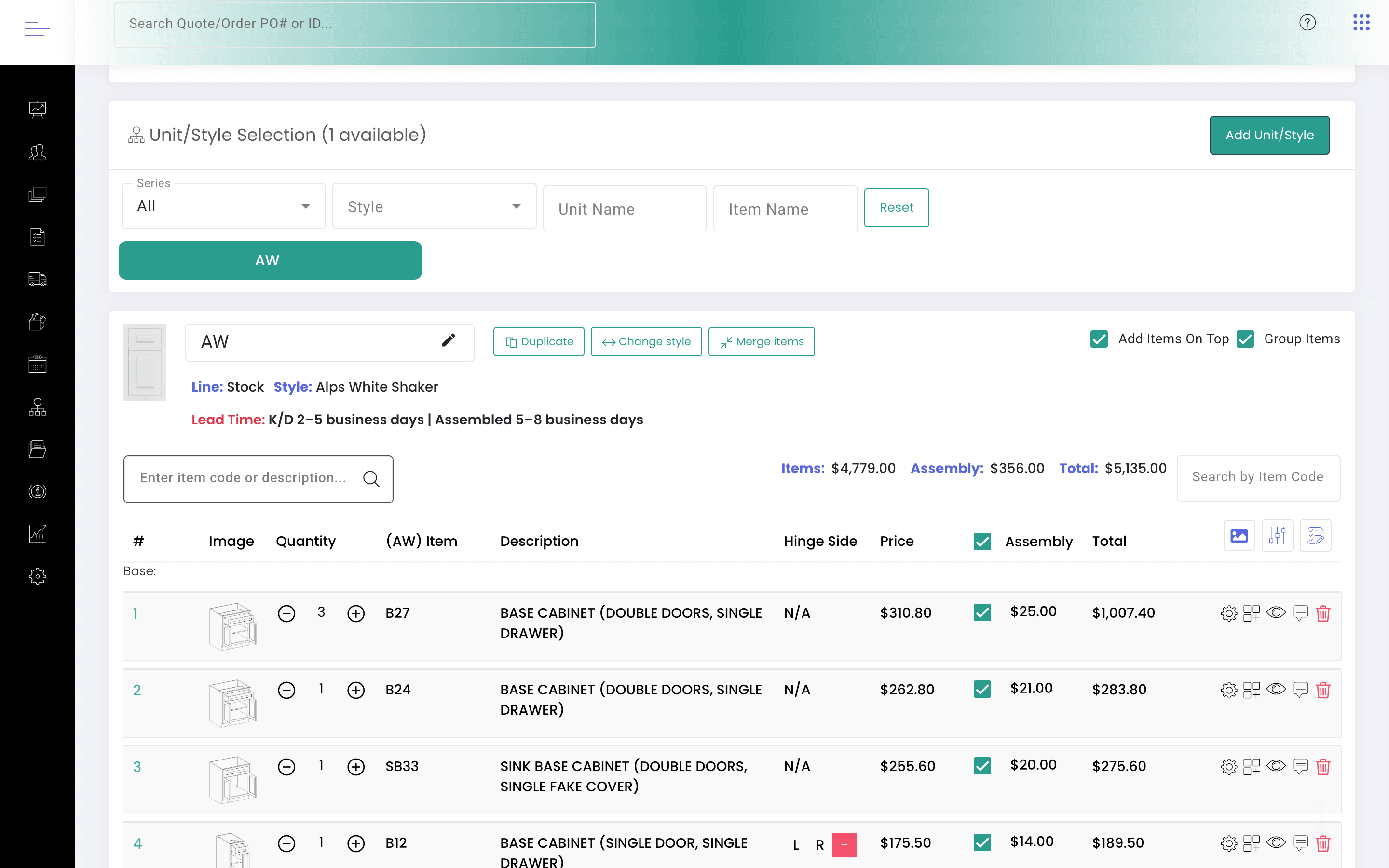
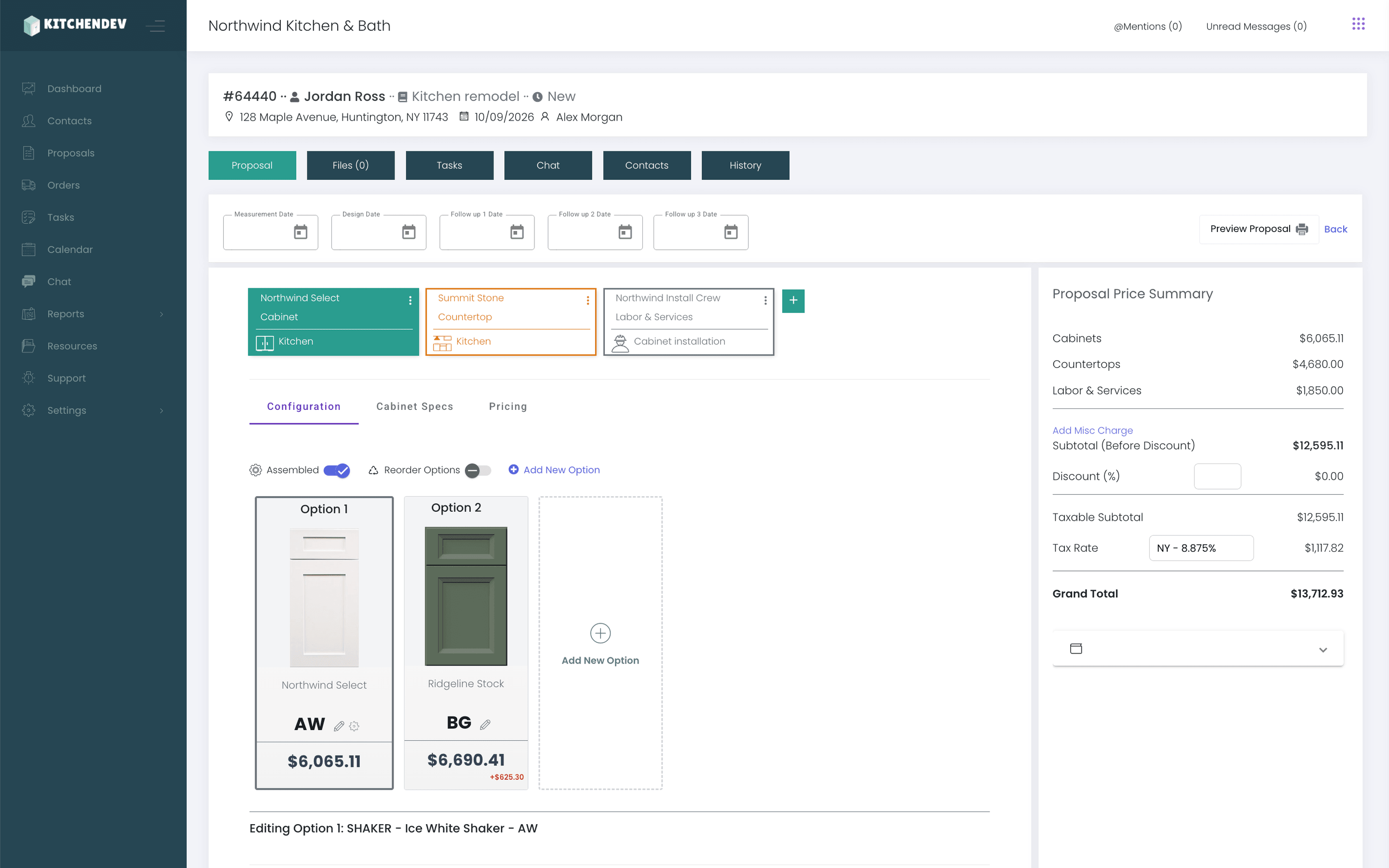
Automation in kitchen cabinet manufacturing is further enhanced through CPQ solutions, which streamline pricing, quoting, and order management. CPQ software allows manufacturers to generate accurate quotes instantly, reducing errors and ensuring pricing consistency across different customer requests. This eliminates the need for manual calculations, reducing turnaround time and enhancing customer satisfaction.
CPQ solutions also automate order configuration, allowing manufacturers to tailor pricing based on material selection, customization options, and bulk orders. This level of automation not only improves efficiency but also ensures that all quotes align with production capabilities, preventing bottlenecks and reducing lead times. By integrating with design software, CPQ solutions help manufacturers create precise, detailed configurations that match customer requirements seamlessly.

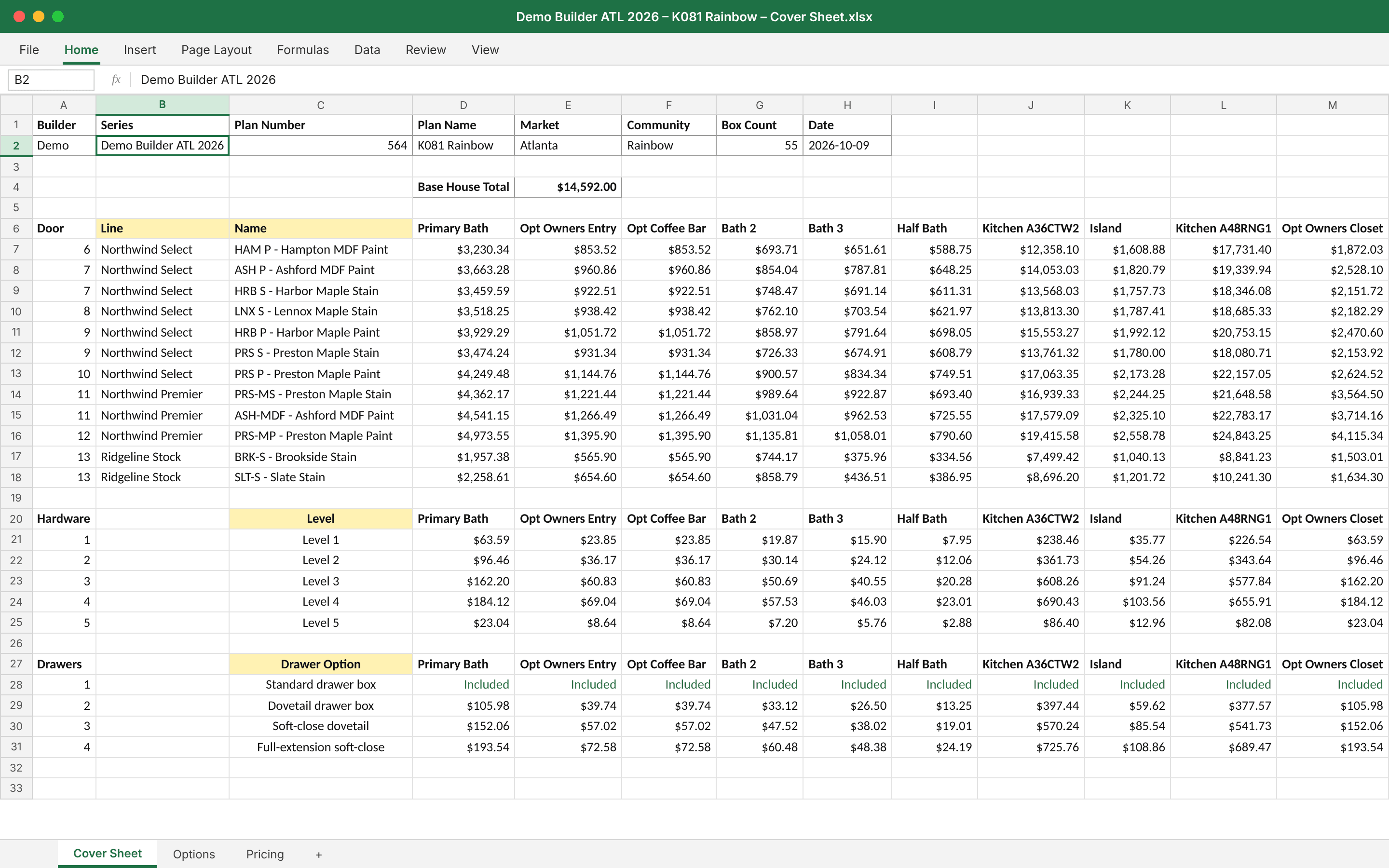
Real-time pricing integration is another crucial feature of CPQ software. By linking directly with material suppliers and distributors, manufacturers can access up-to-date cost information, ensuring accurate pricing adjustments. This real-time automation in kitchen cabinet manufacturing helps businesses maintain profitability while staying competitive in the market. CPQ software enables dynamic pricing strategies and cabinet order tracking, allowing manufacturers to adapt to fluctuating material costs and optimize revenue.
Another key benefit of CPQ software is enhanced order tracking and communication. By centralizing all order details within a single platform, manufacturers can ensure transparency and efficiency across departments. Sales teams, production staff, and suppliers can access real-time updates, minimizing errors and reducing delays. The automation of complex workflows also helps manufacturers scale operations without compromising accuracy.
CPQ solutions also improve customer engagement by offering self-service quoting tools. These tools allow customers to configure their kitchen cabinets, receive instant price estimates, and place orders with greater confidence. By streamlining the buying process, CPQ software increases customer satisfaction and conversion rates.
As digital transformation advances, CPQ solutions are becoming essential for manufacturers looking to improve operational efficiency, reduce costs, and enhance customer interactions. By leveraging automation in kitchen cabinet manufacturing, businesses can remain competitive in a rapidly evolving industry.
KitchenDEV: The Future of Cabinet Manufacturing Efficiency
KitchenDEV provides software solutions for managing kitchen businesses. Our platform seamlessly connects 2020 design, catalogs, inventory, and accounting along with automated cabinet pricing, sales, order management, and customer service. Our tailored solutions are designed for manufacturers, distributors, and retailers to enhance their workflow efficiency.

Advanced CPQ software for cabinet manufacturers
KitchenDEV is an advanced CPQ software solution tailored for the industry. Designed to optimize pricing, quoting, and production, KitchenDEV helps manufacturers eliminate inefficiencies and improve order management.

Solution that optimizes pricing, quoting, and production
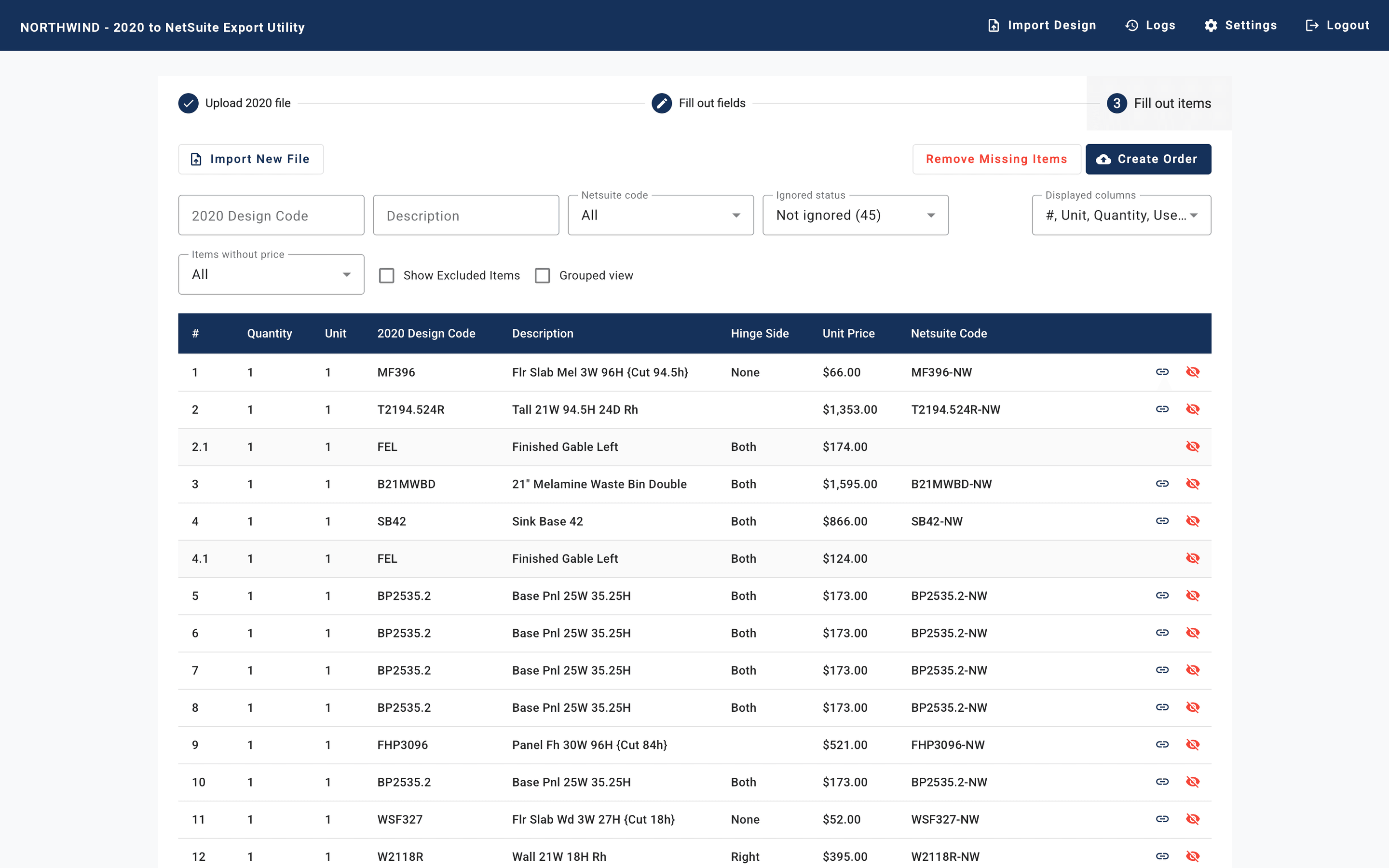
As one of the best ERP systems for cabinetry manufacturers, KitchenDEV provides all the solutions you need to organize, manage, and present your cabinet catalog to your dealers, accept orders, and more. With it, you can manage your catalog, provide your dealers a login, automate orders with configurable steps, track jobs, complete kitchen design import to ERP, import 2020 Designs, and perform kitchen design export to Netsuite, Acumatica, Quickbooks, Freshbooks, and more. With KitchenDEV, you can collect payments electronically from your dealers via ACH or credit card, and easily integrate it into your website.

Benefits for manufacturers
With KitchenDEV, manufacturers benefit from reduced errors, faster lead times, and increased profitability. By embracing KitchenDEV, cabinet manufacturers can future-proof their operations, ensuring they remain competitive in a rapidly evolving industry.
Automation, AI, and Smart Manufacturing Trends
The kitchen cabinet manufacturing industry is undergoing a significant transformation, driven by rapid advancements in automation, artificial intelligence (AI), and smart manufacturing technologies. These innovations are reshaping the way cabinets are designed, produced, and delivered, allowing manufacturers to meet increasing demand while improving overall efficiency.
One of the most impactful trends is the integration of AI-driven analytics into manufacturing processes. AI algorithms are able to analyze vast amounts of data to optimize material usage, predict potential production bottlenecks, and improve quality control measures. These AI systems continuously monitor production processes and identify opportunities to reduce waste, lower costs, and enhance product quality. With such capabilities, manufacturers are able to make data-driven decisions that help them stay competitive in a fast-paced market.

Another major advancement is the use of automation in the production process. Computer Numerical Control (CNC) machines, robotic arms, and automated assembly lines are taking on tasks that traditionally require manual labor. These automated systems improve precision, reduce human error, and increase production speed. By minimizing the need for human intervention, manufacturers can cut labor costs while simultaneously boosting the accuracy and consistency of each cabinet.
The rise of Industry 4.0 principles has also played a crucial role in transforming manufacturing plants into “smart factories.” These IoT-enabled facilities allow real-time monitoring and predictive maintenance, ensuring that equipment stays operational and downtime is minimized. By leveraging data from sensors embedded in machinery, manufacturers can predict when a machine will require maintenance or part replacement, reducing unexpected disruptions in production schedules.
As automation, AI, and IoT continue to evolve, the kitchen cabinet industry is moving toward unprecedented levels of quality, customization, and cost-efficiency. By adopting these technologies, manufacturers are setting new standards for the future of cabinetry production.
The Future of Kitchen Cabinet Manufacturing
The future of kitchen cabinet manufacturing is being shaped by smart manufacturing trend, where automation, AI-driven customization, and data-powered decision-making are poised to revolutionize the industry over the next decade.
As consumer expectations continue to grow, manufacturers find themselves under increasing pressure to deliver higher-quality, more personalized products, while maintaining cost-efficiency and sustainability.

In the coming years, fully automated production lines will become the norm. From design and prototyping to assembly and packaging, every stage of the manufacturing process will be integrated into a seamless digital ecosystem. AI-driven customization will enable manufacturers to create cabinets tailored to individual customer preferences at a scale that was previously unimaginable. These AI systems will analyze customer data, such as style preferences, room dimensions, and color choices, to generate personalized designs that are both aesthetically pleasing and functional.
Cloud-based platforms will play a central role in the future of cabinet manufacturing. These platforms will connect design teams, pricing systems, and production schedules, allowing for real-time collaboration and better decision-making. Cloud integration will enable manufacturers to manage operations more efficiently, reduce human error, and make data-driven decisions that enhance both customer satisfaction and profitability.
Sustainability will also become a driving force in the future of cabinetry production. As consumers become increasingly concerned about the environmental impact of their purchases, manufacturers will adopt eco-friendly materials and production methods. AI and automation will help reduce waste by optimizing material usage and minimizing energy consumption during manufacturing. Additionally, the use of advanced recycling techniques and sustainable sourcing of materials will further support environmentally conscious practices.
Manufacturers who invest in smart manufacturing solutions, such as AI-powered efficiency models and cloud-based platforms, will be well-positioned to thrive in this new landscape. The future of cabinet manufacturing is not just about efficiency and customization; it’s also about creating products that align with consumers’ growing focus on sustainability. By embracing these innovations, manufacturers will be able to meet the demands of the future while remaining profitable and sustainable.
Future of Cabinet Manufacturing FAQ
1. How can AI improve cabinet manufacturing efficiency?
AI can enhance cabinet manufacturing efficiency by optimizing material usage and predicting production bottlenecks. AI algorithms analyze data in real-time, identifying areas for improvement and minimizing waste. This leads to faster production cycles and reduced costs while maintaining high-quality standards.
2. What role does automation play in cabinet manufacturing efficiency?
Automation, through CNC machines and robotic arms, significantly boosts manufacturing efficiency by reducing human error and increasing precision. Automated assembly lines accelerate production while maintaining consistency in every cabinet. This results in lower labor costs and higher output without compromising quality.
3. How does smart manufacturing in cabinetry impact manufacturing efficiency?
Smart manufacturing in cabinetry, powered by IoT and real-time monitoring, improves manufacturing efficiency by enabling predictive maintenance and minimizing downtime. With sensors embedded in machines, manufacturers can anticipate issues before they occur, ensuring smooth operations. This reduces interruptions and increases overall production speed and reliability.
4. How does cloud technology contribute to cabinetry manufacturing efficiency?
Cloud technology facilitates seamless integration of design, pricing, and production processes, enhancing manufacturing efficiency. It allows for real-time updates and better communication across teams, reducing the risk of errors and delays. This streamlined workflow leads to faster decision-making and smoother project execution.
5. How do CPQ solutions and KitchenDEV impact cabinet manufacturing efficiency?
CPQ (Configure, Price, Quote) solutions and KitchenDEV significantly improve cabinet manufacturing efficiency by streamlining the design, pricing, and quoting process. These tools allow manufacturers to quickly generate accurate quotes and customize cabinet designs based on customer preferences. By automating these tasks, manufacturers reduce errors, speed up workflows, and enhance overall production efficiency.
Conclusion
Digital transformation is revolutionizing the kitchen cabinet manufacturing industry, driving greater efficiency, customization, and sustainability. With the integration of advanced technologies like AI, automation, and IoT, manufacturers are improving every stage of production, from design to delivery. These innovations are not only enhancing quality control but also reducing costs and waste, allowing companies to stay competitive in a fast-evolving market.
KitchenDEV is a powerful digital solution that reshapes the way cabinet manufacturing businesses operate. By streamlining design processes, pricing, and quoting, KitchenDEV empowers manufacturers to offer customized solutions with greater speed and precision. Our platform integrates seamlessly with CPQ (Configure, Price, Quote) solutions, enabling manufacturers to automate time-consuming tasks and provide accurate, real-time quotes, ensuring a smoother and more efficient workflow.
Cabinet manufacturers who embrace CPQ solutions today will be better positioned to meet customer demands for personalized designs while improving operational efficiency. By adopting KitchenDEV, manufacturers can stay ahead of industry trends, optimize their processes, and boost their competitive edge. The time to embrace digital transformation in cabinet manufacturing is now – those who do will reap the benefits of greater innovation, profitability, and sustainability.